
Answer Engine Optimization
The Adamiro AEO Playbook
AEO means Answer Engine Optimization, which some call generative engine optimization, GEO: the practice of making sure AI engines mention your company when buyers ask for recommendations. This page explains how it works, how Adamiro measures it, and what actually moves the numbers.
Search used to end in ten blue links. It now ends in one answer. If that answer doesn’t include you, the buyer never knew you existed.
Out of sight. Out of business.
Watch a video explainer
Listen to a podcast
The definition
What is the AEO Playbook?
AEO is the work of earning a place in AI-generated answers. When a founder asks an engine “what tools help me track my market,” the engine names a handful of companies. AEO determines whether you’re one of them. This AEO Playbook explains the Adamiro AI Visibility solutions.
Is GEO different from AEO?
They are two halves of one job. AEO, answer engine optimization, is earning a place in the answer an assistant gives today. GEO, generative engine optimization, is the slower work of changing what the model behind that assistant believes about your company before anyone asks it anything. This page uses both names. Adamiro measures the first every week, and the moves further down this page are aimed at the second.
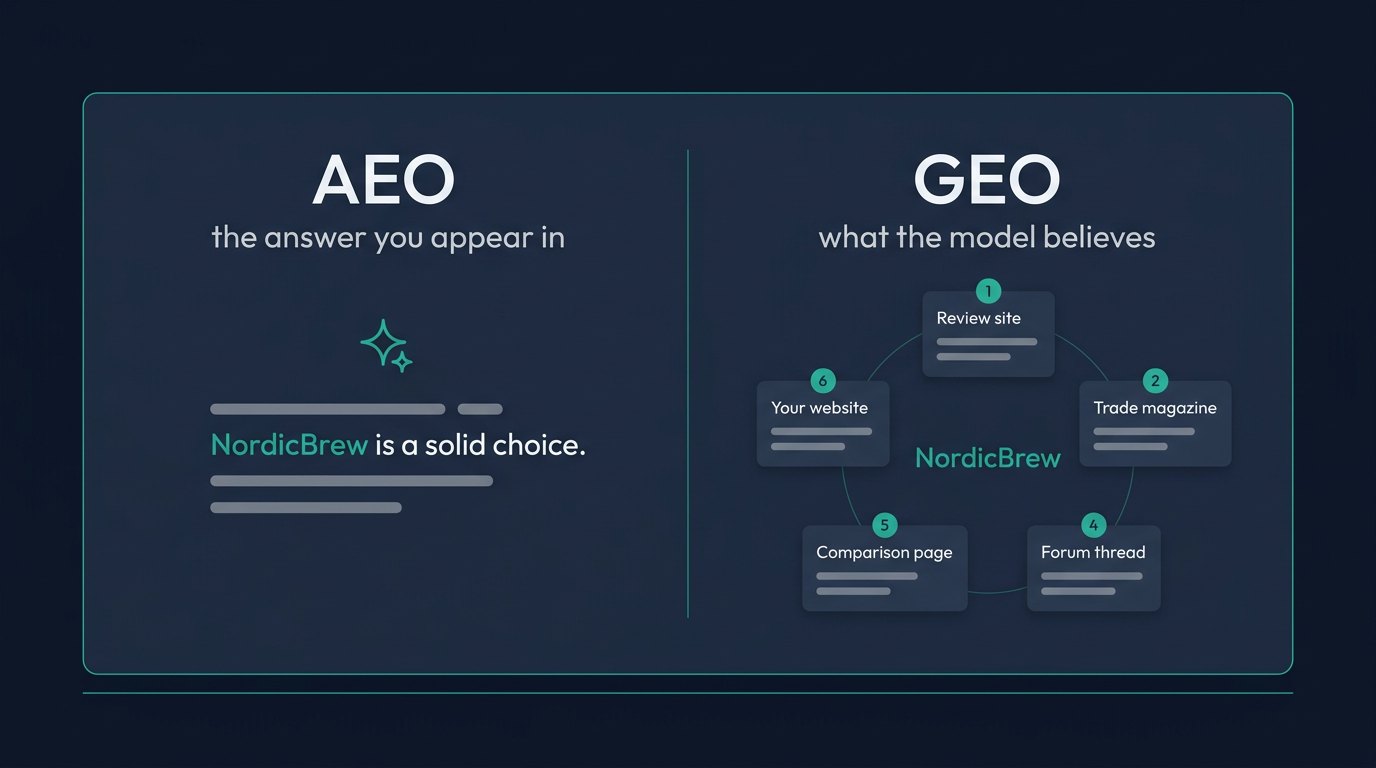
It is not SEO with a new name. Ranking first on Google barely correlates with being cited by AI engines. Industry research found the two are nearly independent of each other. You can own page one and still be invisible in answers.
How engines choose
How do AI engines pick which companies to mention?
Engines favor third-party evidence over first-party claims. Research across thousands of AI citations found that most come from independent blog posts and comparison articles, not from company product pages. Your own website telling engines you’re great carries little weight.
Three platforms carry outsized trust: community discussion, video, and professional networks. If real people discuss your company in those places, engines treat it as consensus. If nobody does, engines have nothing to repeat.
Reference: AI Citation Durability & Sourcing Audit – AuthorityTech (March 2026)
Mentioned is not chosen
Does being mentioned by an AI mean it recommends you?
No, and the gap can be the whole story. Armature watched three coding agents pick tools across 75 codebases, and The New Stack reported the result in September 2026: PayPal named 139 times and chosen zero, LangChain the most-mentioned framework at 194 mentions and chosen four. Reading those counts in the same article, Jeet Pattanaik argued that the lever is no longer brand awareness but whatever the agent happens to read at the moment it decides, and that vendors will work on their documentation and their pricing page next, for a reader that does not skim and takes a footnote literally.
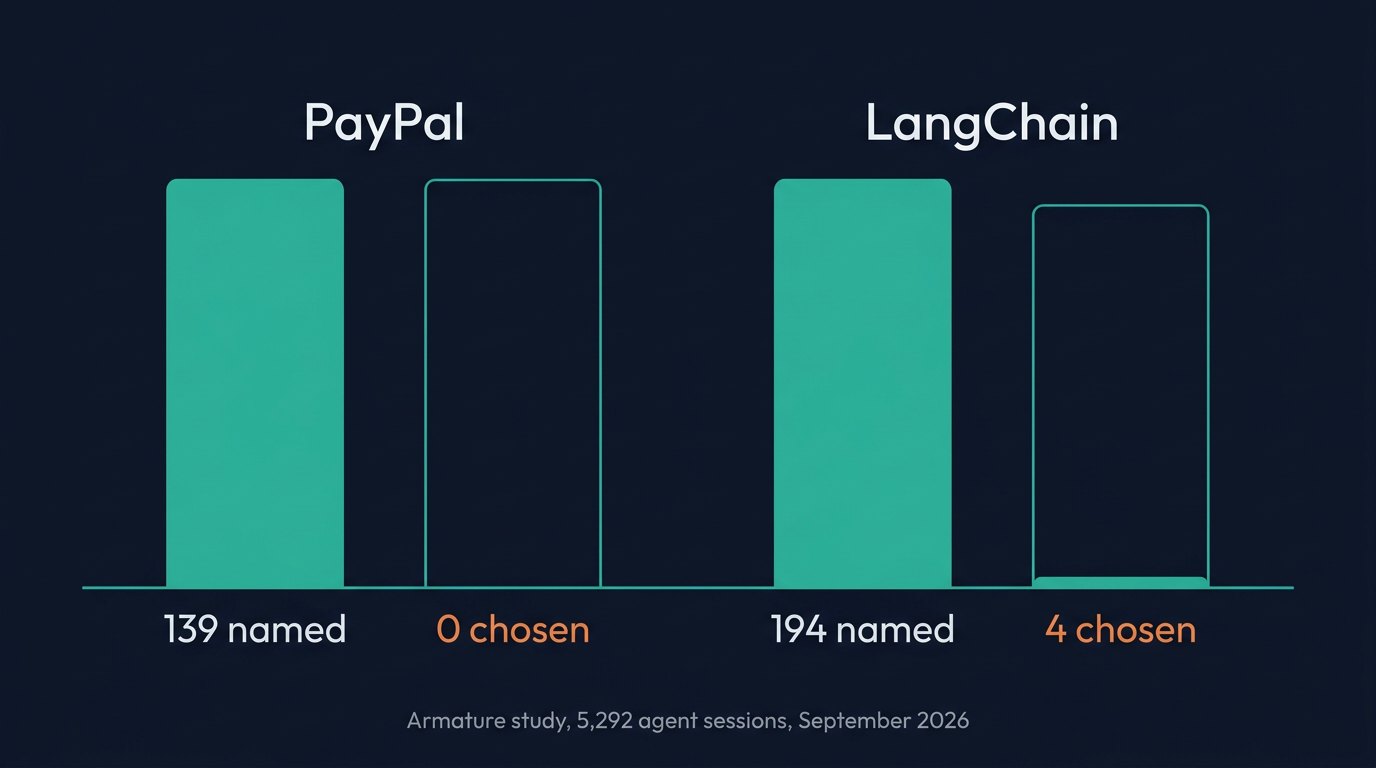
That study is about software tools, so read it as a pattern and not as a forecast for your own market. The pattern is that a name in an answer is not a recommendation. Armature’s co-founder put the rest of it to The New Stack in September 2026 as twenty years of brand building frozen in time, with agents reaching for the product that made a company famous and drawing a blank on what it sells now. Your weekly report keeps the two counts apart: named, and chosen.
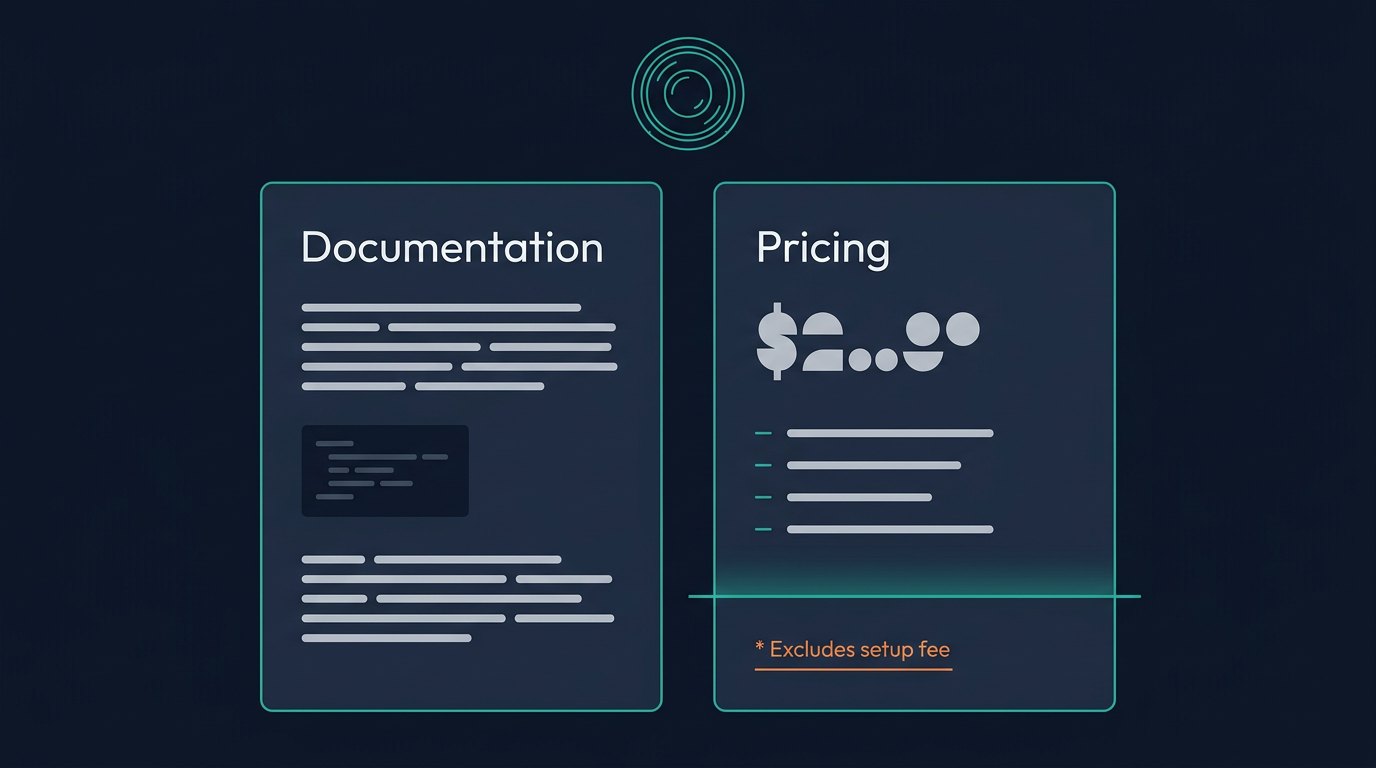
Source: “How coding agents select their tools of choice”, The New Stack, 7 September 2026, on a study by Armature, a vendor that sells the service it measured and whose headline counts come from a validated subset of 5,292 sessions rather than the full seventeen thousand it ran.
The decay problem
Why do AI visibility scores change so fast?
Citations decay. Studies show most AI citations disappear within about six months as engines refresh their sources. AEO is not a project you finish. It’s a cadence you keep, which is why Adamiro measures weekly instead of once.
The methodology
How does Adamiro measure AI visibility?
Adamiro asks the questions your buyers ask. Every week, realistic buyer questions run through the major AI engines: questions about your problem space, your category, and your company by name. Each answer is checked for one thing first. Were you in it?
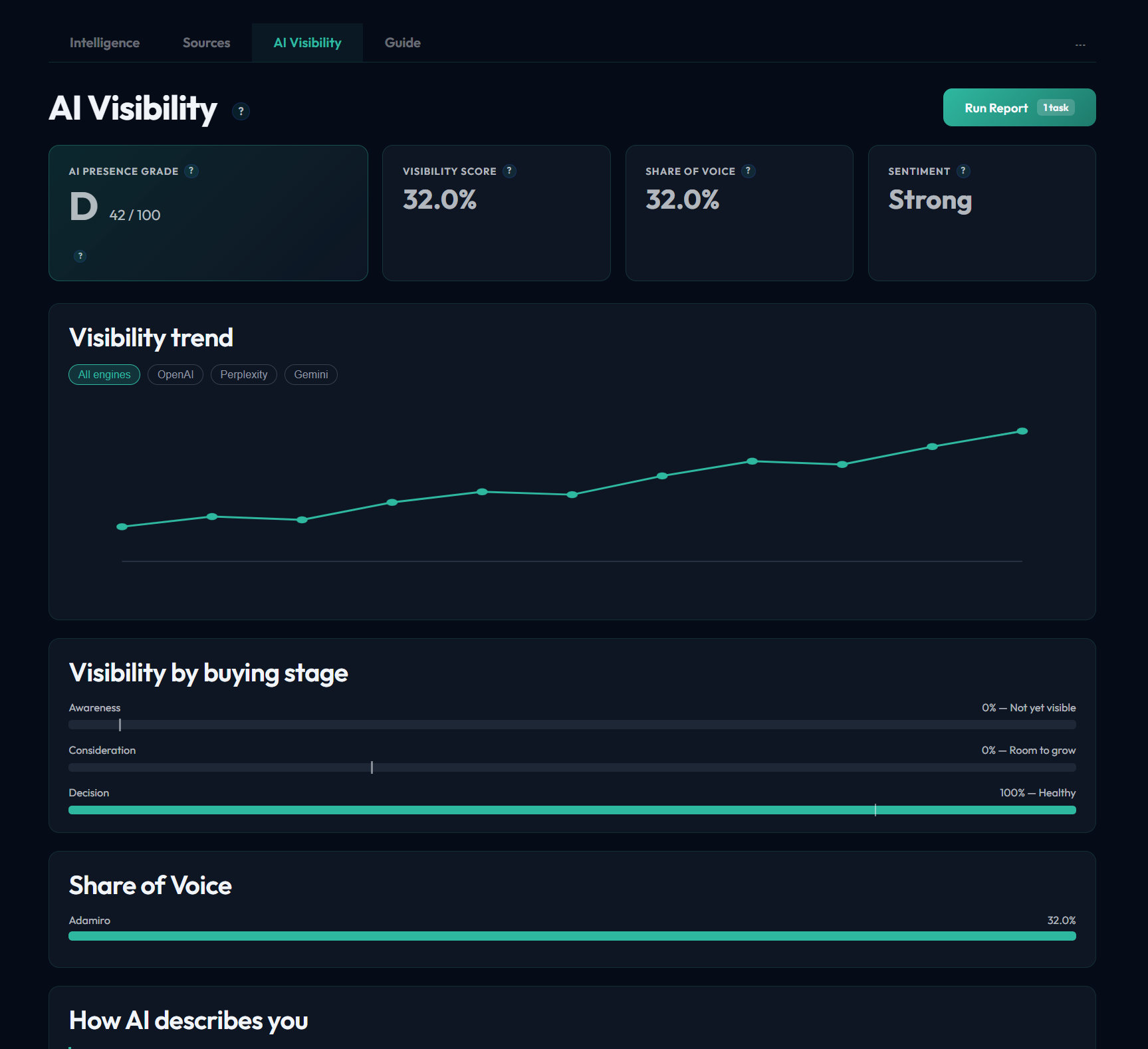
From there, every answer is scored for position, for which competitors appeared, and for how the engine described you. Those scores roll into three numbers you’ll see on your dashboard.
Expectation bands
What is a good AI visibility score?
It depends on the question type, and expecting one number to cover all three is how founders misread their standing. Direct questions should land at 80% or better, appearing in 20 to 40% of category answers is competitive, and near zero on problem questions is normal even for strong brands.
Direct questions
80%+
A buyer asks about you by name. Engines should answer well at least 80% of the time.
Below 50% means engines can’t describe your company even when asked.
That’s the first thing to fix.
Category questions
20–40%
A buyer asks for options. Appearing in 20 to 40% of answers is competitive.
The engine only names a few companies, so every appearance here is a win taken from someone else.
Problem questions
≈ 0%
A buyer describes a pain, no category named. Near zero is normal, even for strong brands.
Any presence here means engines associate you with the problem itself. That’s the deepest form of visibility there is.
Your two numbers
What is the AI Presence Grade?
One number from 0 to 100 that combines the three layers: how visible you are relative to realistic expectations for each question type, how you rank against the competitors you track, and how positively engines describe you. The exact weighting is shown inside your dashboard. No black boxes.
What is the Adamiro Index?
Your Presence Grade, placed among every company measuring AI visibility on Adamiro. An Index of 72 means you score higher than 72% of them. It’s a community benchmark, not a market verdict, and it’s the number to watch quarter over quarter.
The playbook
What actually improves AI visibility?
Five moves, in order of evidence: answer real questions in public, show up where buyers compare, earn community mentions, refresh on a cadence, and measure before you guess.
Move 01
Answer real questions in public
Independent articles that answer a specific buyer question are cited most often. Lead with the answer in the first hundred words. Engines lift paragraphs that stand alone.
Move 02
Show up where buyers compare
Comparison and “best tools for” articles dominate citations. Being listed next to competitors beats a page about yourself alone.
Move 03
Earn community mentions
Genuine discussion on community platforms is the strongest trust signal engines have. It can’t be faked, and it compounds.
Move 04
Refresh on a cadence
Because citations decay, updating strong pieces beats publishing new ones into silence. Monthly touches keep sources alive.
Move 05
Measure before you guess
Every move above is a bet. Your weekly report tells you which bets paid, question by question, engine by engine.
See your own numbers
Your first AI Visibility report takes minutes to set up and one task to run.
Cancel any time. No setup fees.
Sources: aggregated Adamiro platform data; published industry research on AI citation behavior, including HubSpot’s 2026 AEO study. The New Stack, September 2026, on Armature’s tool-choice study. LAST REVIEWED: SEPTEMBER 2026