AI Visibility explained
Buyers ask an assistant before they call you. We check whether it names you.
A plain-words guide to what AI visibility is, how we measure it, and how to read the numbers in your report. Written for anyone. No marketing background needed.
The short version
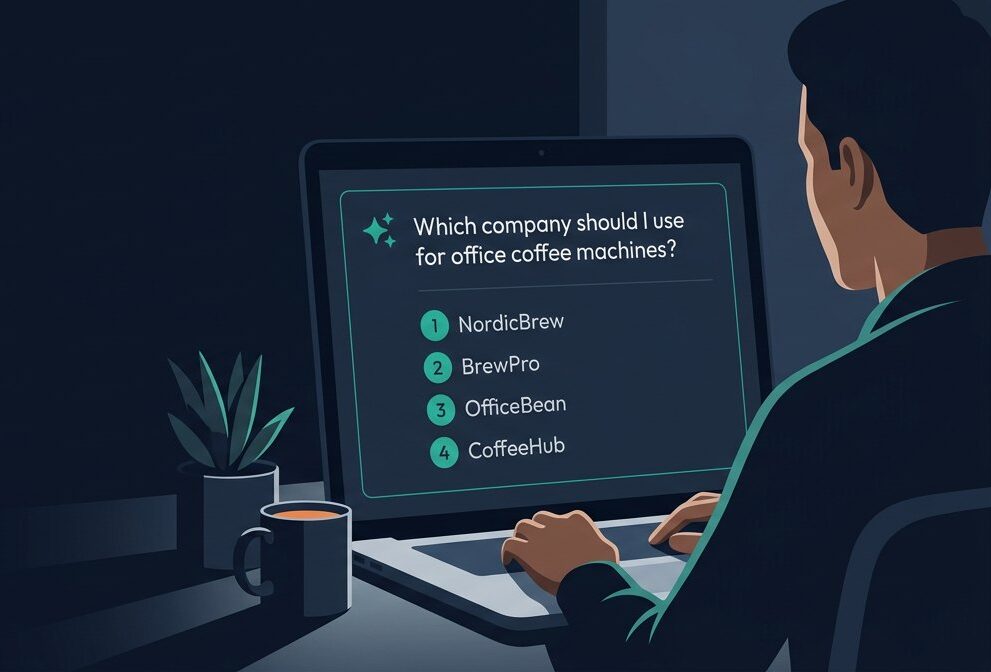
When someone asks ChatGPT “which company should I use for this?”, the answer is a short list. Three or four names, a sentence on each. AI visibility is whether your company is one of those names.
That is the whole idea. Everything below is how we check, and what to do with what we find.
Watch a video explainer
Listen to a podcast
The picking moved
For twenty years, finding a supplier worked one way. You typed a question into Google, got ten links, and clicked a few. You did the picking.
A growing share of people now type the same question into an assistant instead. ChatGPT, Perplexity, Google’s AI Mode, Claude. The assistant doesn’t hand back ten links. It hands back an answer with a few names in it.
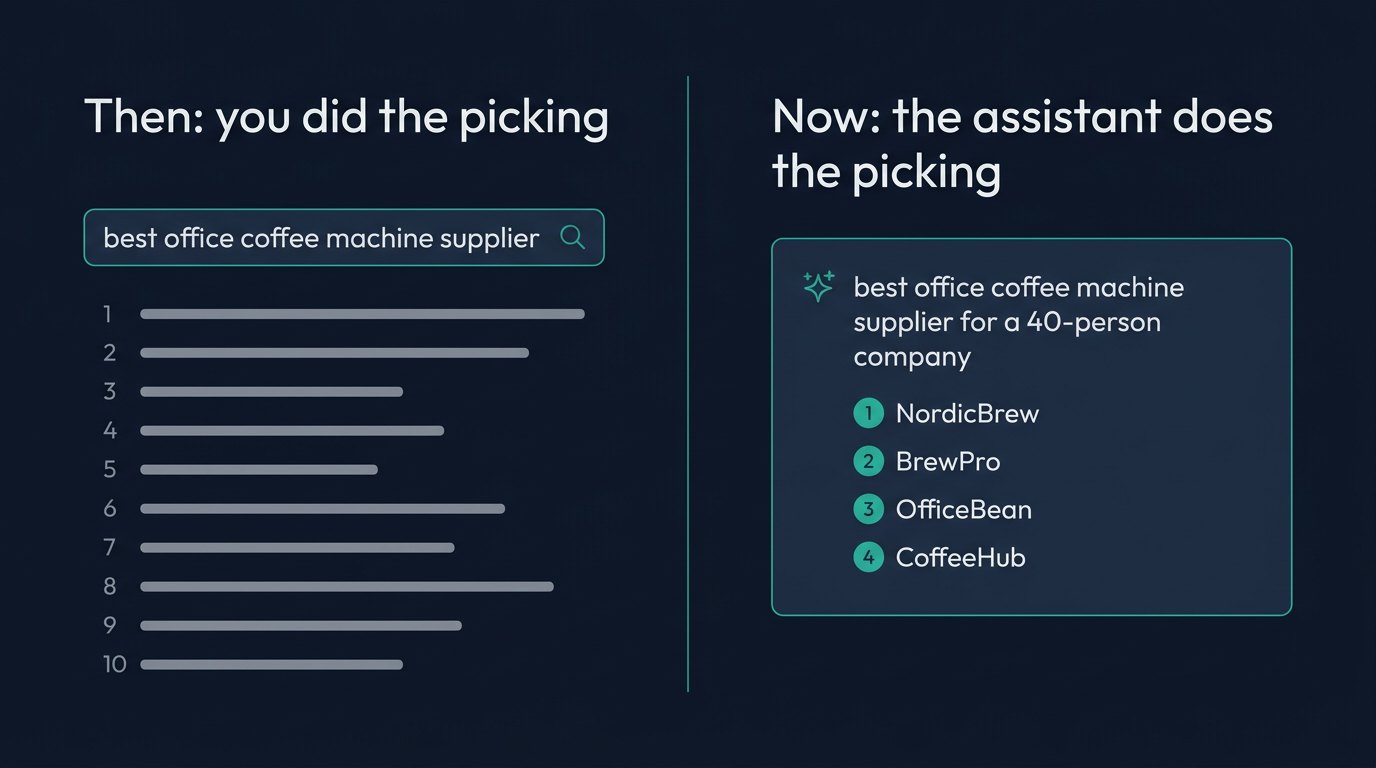
That changes one thing, and it’s the thing that matters. On Google, being on page one was enough. With an assistant, the assistant does the picking. If it leaves you out, the buyer never sees you. There is no page two.
Say you sell coffee machines to offices. A facilities manager types “best office coffee machine supplier for a 40-person company” into ChatGPT. The assistant names four suppliers. You’re either one of them, or you don’t exist for that person that day.
Here is the part that makes this hard to notice. When you lose a buyer this way, nothing shows up anywhere. No visit to your site, no lost lead in your CRM. The conversation happened without you, and your analytics never knew it took place.
Where the assistant gets its answer
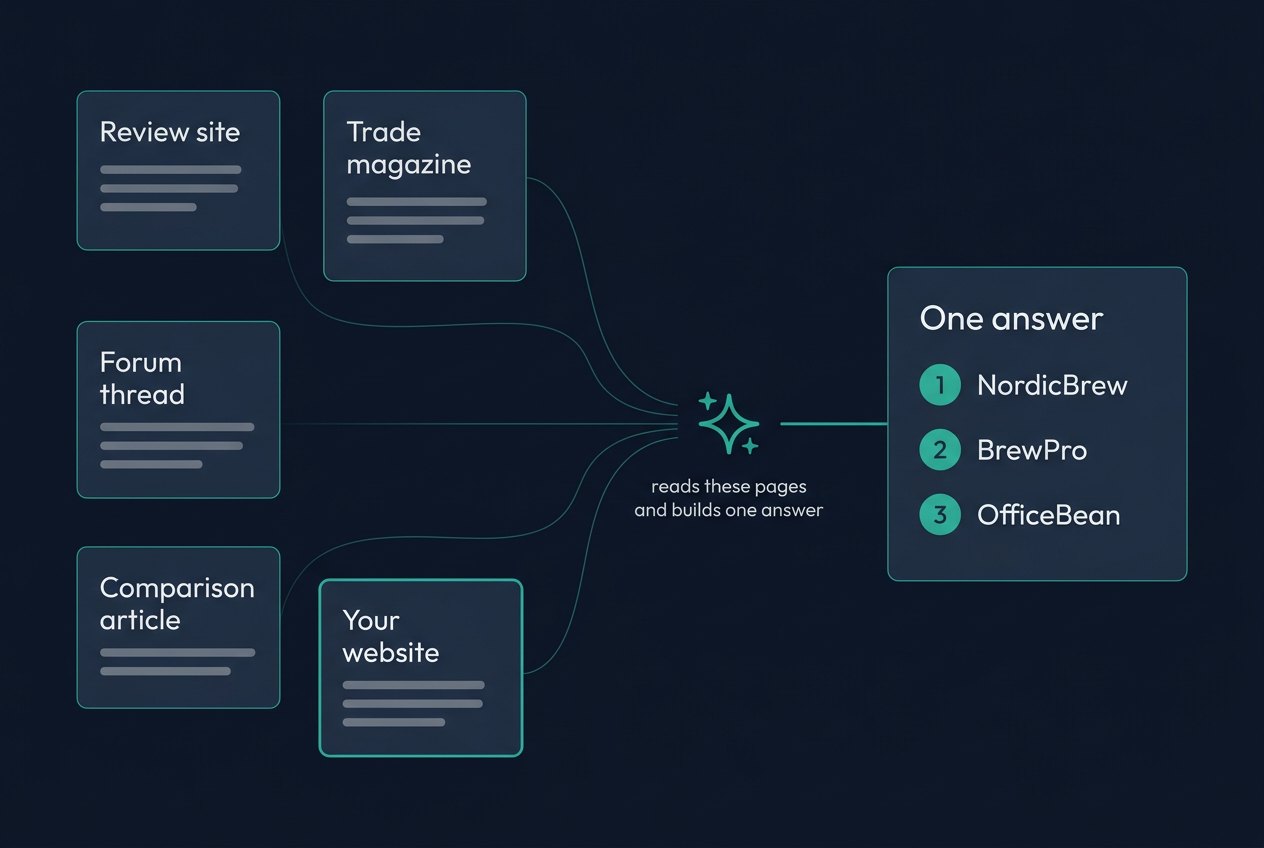
An assistant isn’t guessing, and it isn’t picking favorites. It builds each answer from pages it has read on the web. Review sites, trade magazines, comparison articles, forum threads, and company websites, including yours.
Roughly speaking, it names the companies that show up most often and most credibly across those pages, for that particular question. Then it borrows the language those pages use to describe them.
The assistant also carries an older memory of companies, formed while it was trained, and that memory does not refresh when you launch something new. Armature studied how AI coding assistants pick tools, and The New Stack reported in September 2026 that the assistants kept reaching for the product a company was famous for years ago while drawing a blank on the one it sells today. The pages an assistant reads at answer time are the part you can move. The memory is not.
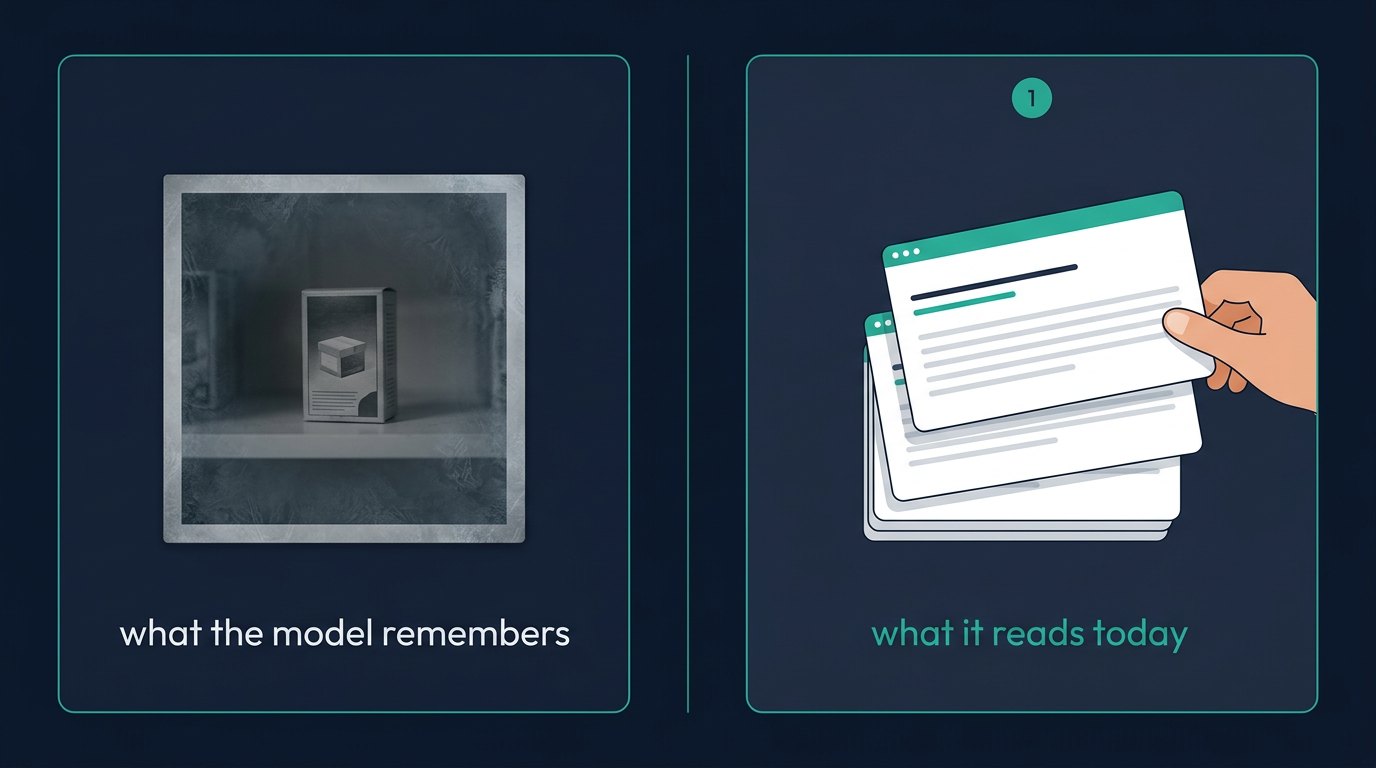
This is good news. It means the answer can be moved. If you know which pages the assistant leaned on, you know where your name needs to appear.
What we do, step by step
We can’t watch what every buyer in the world asks. So we do the next best thing. We ask the assistants ourselves, the way a buyer would, and read what comes back.
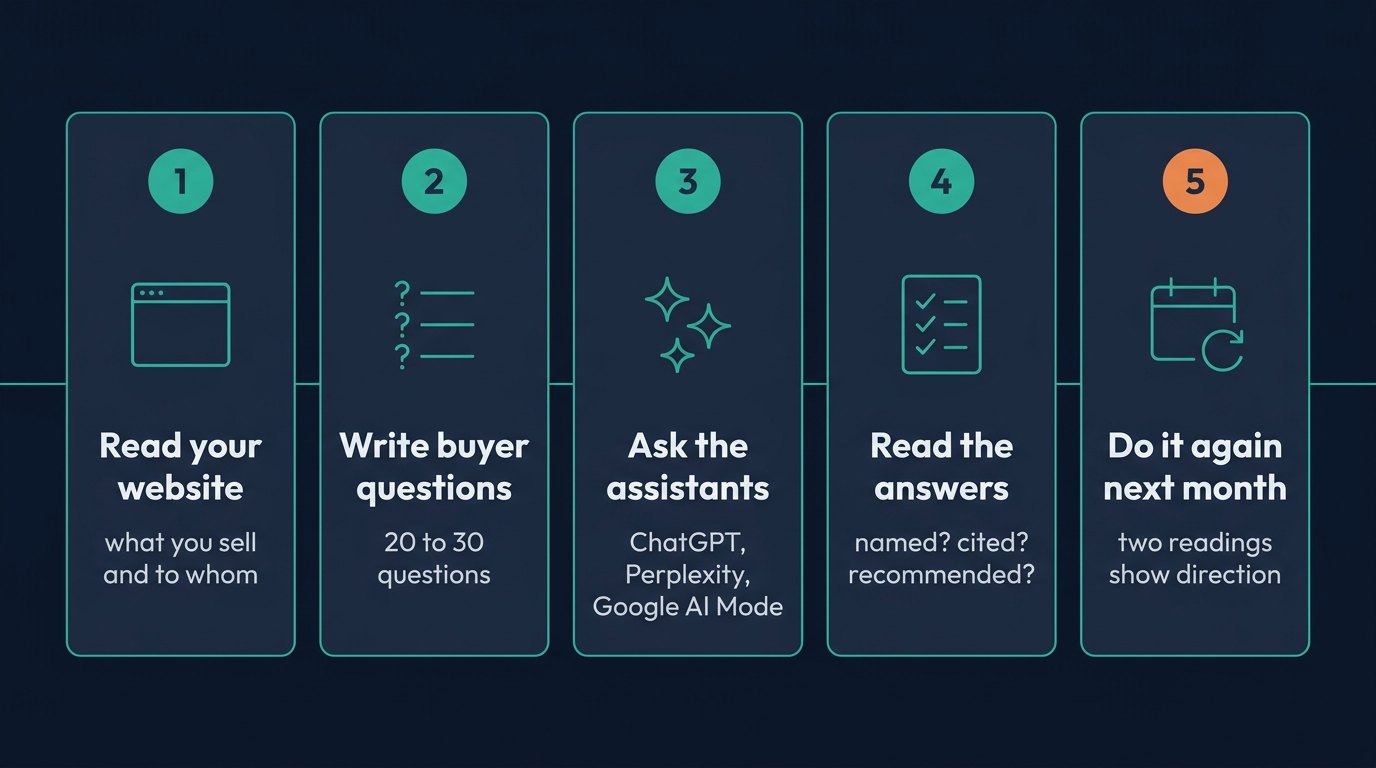
- We read your website. Not to grade it. To understand what you sell, to whom, and in which market. Nobody at your company has to fill in a form.
- We write the questions a buyer would ask. Usually 20 to 30. Some are early and broad: “what should I look for in an office coffee supplier?” Some are close to a purchase: “who supplies bean-to-cup machines with a service contract in Sweden?” A few include your name on purpose, for a reason explained further down.
- We put every question to several assistants. The same question, word for word, to each one. Different assistants read different pages, so they give different answers.
- We read every answer and note four things. Did it name you? Did it name a competitor? How did it describe you? Which web pages did it use to build the answer?
- We do it again next month. Answers change as the web changes. One reading tells you where you stand. Two tell you which way you’re moving.
A report, read aloud
Reading your report
Here is a report as it might look for the coffee supplier. The numbers come from a live account with the name changed.
| What the report shows | Example | What it means in plain words |
|---|---|---|
| Questions asked | 25 | How many buyer questions we wrote from your site and put to the assistants. |
| Answers received | 75 | Each question went to 3 assistants. 25 questions × 3 = 75 answers to read. |
| Answers naming you | 24 of 75 (32%) | In roughly one answer out of three, your name came up. The percentage is the number to remember. |
| Answers citing your site | 9 of 75 (12%) | In 9 answers, the assistant pointed to a page on your own website as a source. It has read you and trusts you enough to lean on you. |
| Sources cited in total | 435 | Every web page the assistants used across all 75 answers, added up. Most are not yours. |
| Visibility score | 32 | The share of answers that named you, as a number out of 100. A count, not a grade we hand out. |
| Named when the question left your name out | 0 of 51 (0%) | 17 of the 25 questions didn’t mention you. Of the 51 answers to those, none suggested you. This is the honest number. |
| Recommended, not only named | 3 of 24 | Of the 24 answers that named you, 3 put you first or told the buyer to pick you. The rest listed you alongside others. |
Two rows deserve most of your attention: the visibility score, and the row directly beneath it. The gap between 32 and 0 is the story of this report.
Known is not the same as found
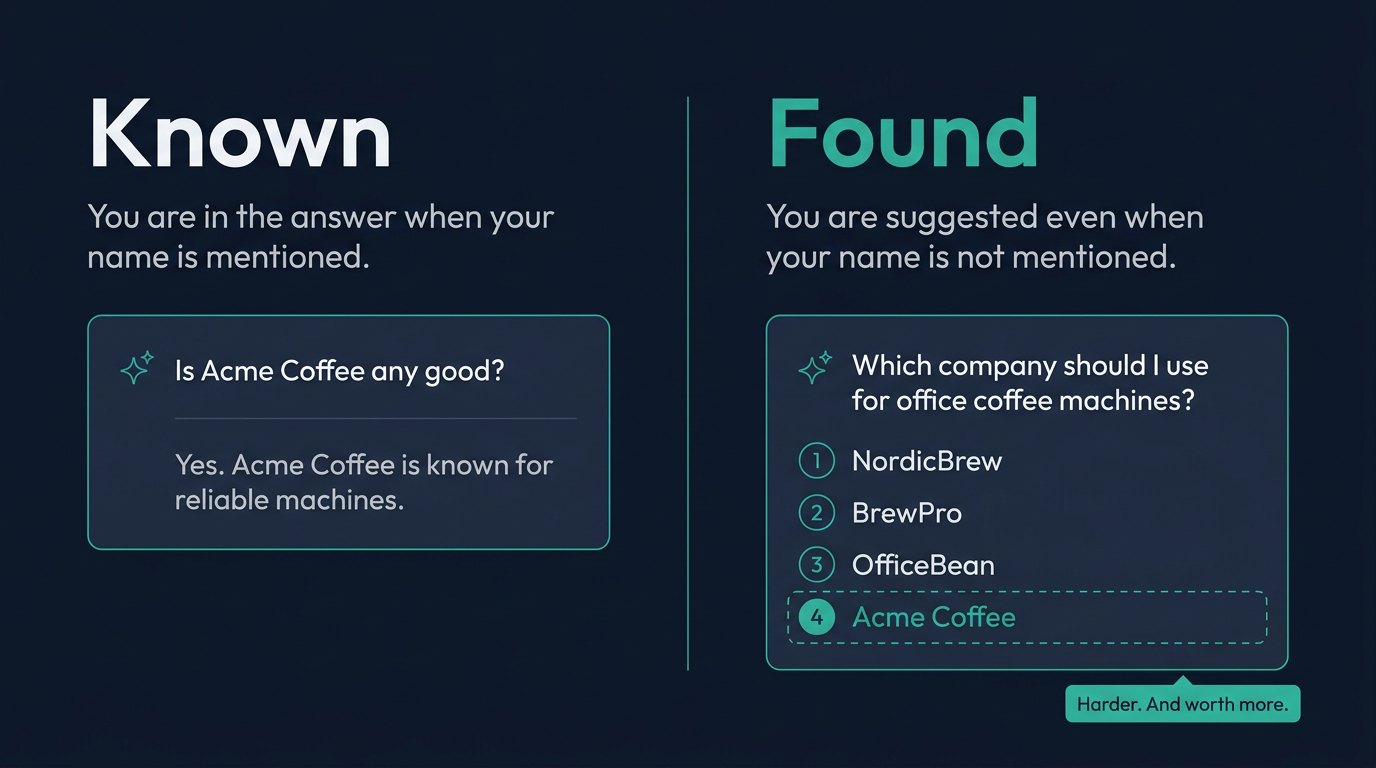
Some of the questions contain your company’s name on purpose. “Is Acme Coffee any good?” tests how the assistant describes you once it knows who you are. That matters, because a buyer who has heard of you will ask exactly that.
It doesn’t test whether the assistant would have found you on its own. An assistant that is handed your name will almost always repeat it back. So a score that pools both kinds of question reads higher than the honest number.
That is why the report also shows named when the question left your name out. In the example above, the pooled score is 32 and this number is 0. Acme is described well whenever someone asks about it by name. It’s suggested to no one who doesn’t already know it.
Being known brings back the buyers you already have. Being found brings the new ones. For most companies, the second number is the one worth working on.
Being named is also not the same as being chosen. An answer can list five companies and recommend one, or recommend none. That is why the report counts recommended separately from named.
The gap between the two can be wide. In September 2026 The New Stack reported a study by Armature of how AI coding assistants pick tools, in which one payment company was named 139 times and picked zero. That is a different market from yours. The pattern is the point.
Three shapes a report can take
Most reports fall into one of three patterns. Each points to a different next step.
Known but not found. High pooled score, low or zero unprompted score. The assistant describes you well when asked, and never volunteers you. Your problem isn’t your website. It’s that the pages the assistant trusts for your category don’t mention you. Open the sources list and find the three or four pages that appear most often. Getting named on those pages is the job.
Found but not read. You’re named in a fair share of answers, but almost none cite your site. The assistant knows your name from other people’s pages and hasn’t leaned on yours. Your site may be hard for it to read, or it may say little the assistant can use. Clear, factual pages about what you do, for whom, and at what price tend to change this.
Read but not chosen. You’re named and cited, but rarely recommended. Read how the assistant describes you next to the companies it does recommend. The difference is usually specific: a missing certification, no pricing, no case studies, or a competitor with a sharper specialism. That description is your to-do list.
What moves the number, and what doesn’t
Moves it: being mentioned on the pages the assistants already trust for your category. Clear, factual, specific pages on your own site. The same description of what you do, everywhere it appears on the web. Time, because assistants re-read the web on their own schedule.
Doesn’t move it: advertising, in any form. There are no paid placements in an assistant’s answer. Keywords packed into your pages. Asking the assistant to remember you. Changing your website and measuring the next day.
Questions we hear often
Why did the number change when we changed nothing?
Because the web changed. A competitor published a comparison, a forum thread ranked, or an assistant updated what it reads. This is normal. It’s also why one reading is never enough.
Is 32 good?
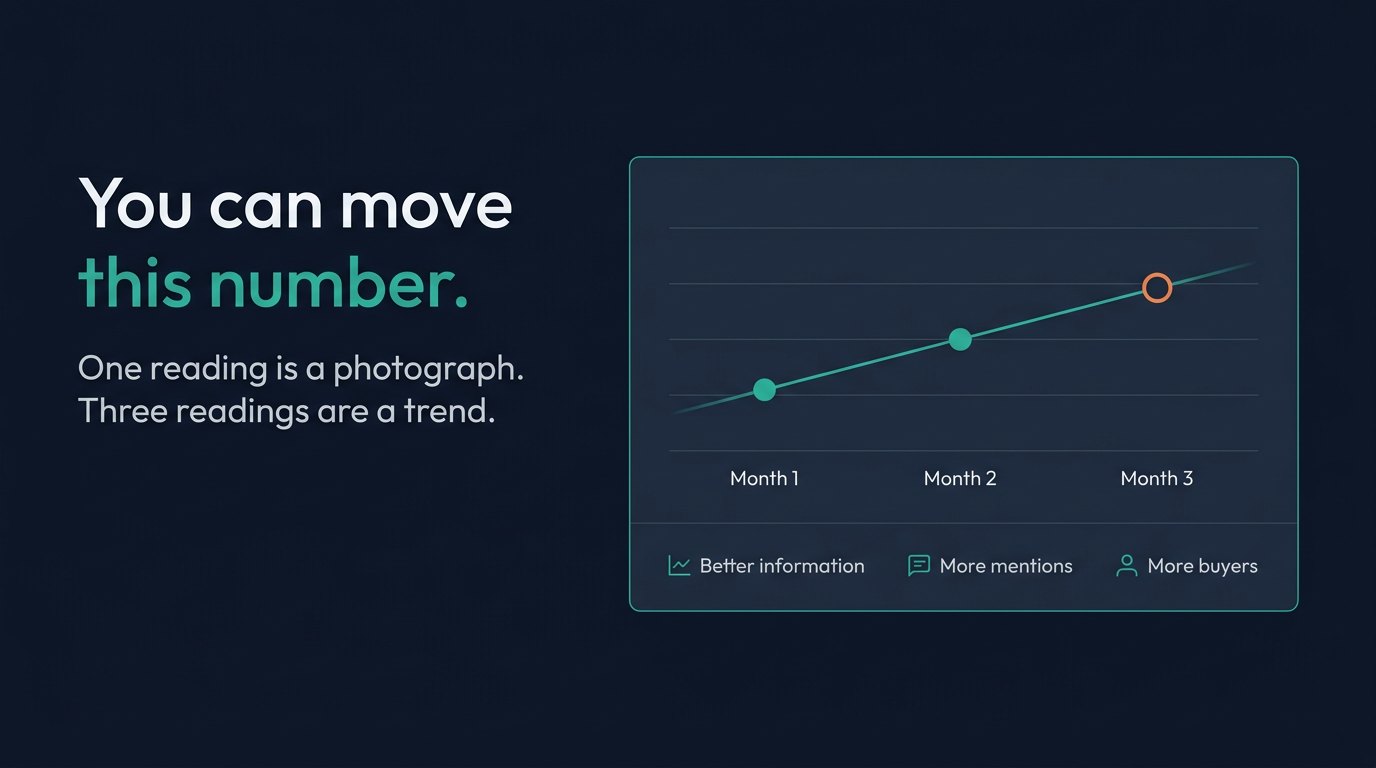
There’s no universal pass mark. A niche supplier in one country might be pleased with 32. A category leader would be worried. What matters is the direction over three readings, and the unprompted number more than the pooled one.
Does this replace what we do for Google?
No. It sits beside it. Assistants read the same web Google indexes, so good pages help both. But the assistant does the picking, so being on page one is no longer enough on its own.
Can we ask the assistants ourselves?
Yes, for a handful of questions. The free checker does five in about a minute. What is hard to do by hand is 25 questions across three assistants, every month, with every source recorded and compared to last time.
Which assistants do you ask?
The ones your buyers use most. Today that means ChatGPT, Perplexity and Google’s AI Mode. The set will change as buyer habits do.
Next month
Read the questions where you weren’t named. Those are the buyers you’re losing before the conversation starts. Look at which sources shaped those answers. Then measure again.
One reading is a photograph. Two readings are a direction. Three are a trend you can act on.